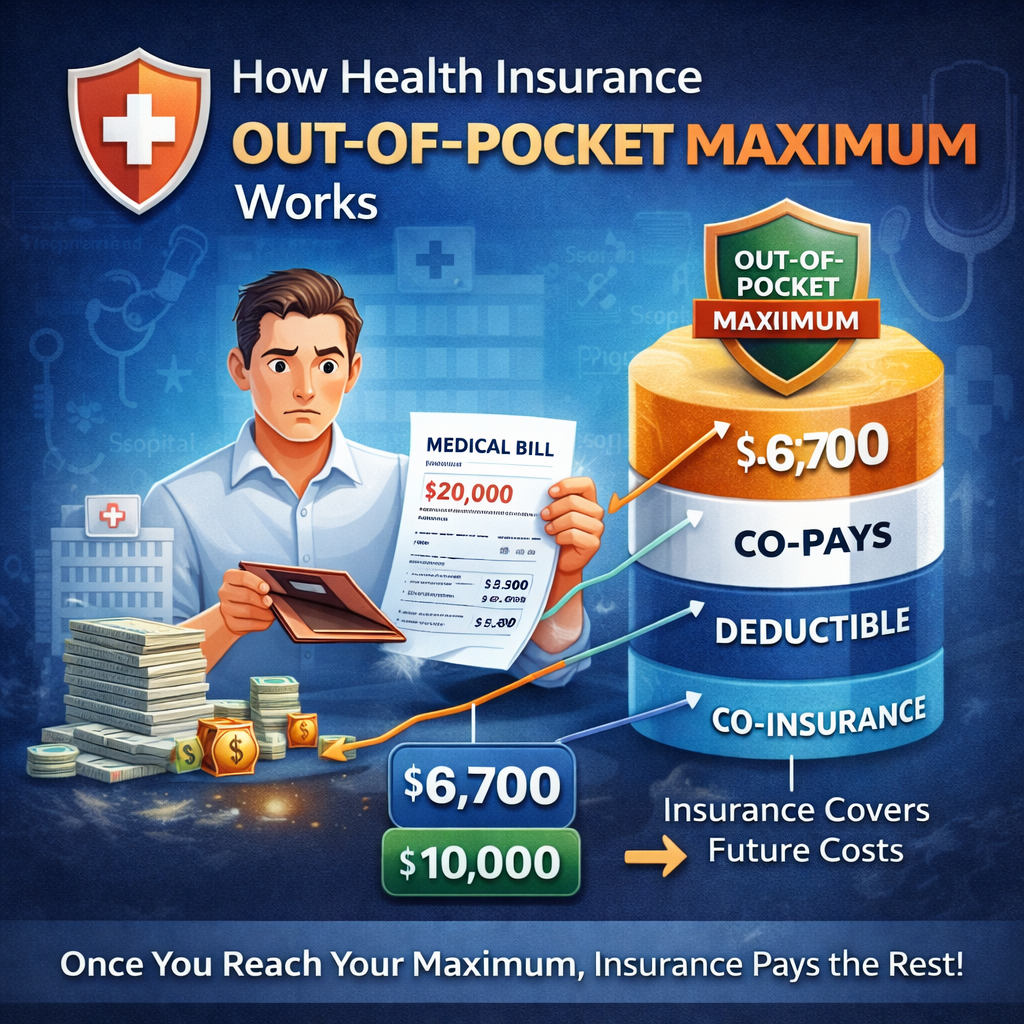
Introduction: The Hidden Limit That Can Protect You From Medical Debt
Many people in the United States believe that having health insurance means they won’t face major medical bills.
But after a serious illness, accident, or emergency surgery, policyholders are often shocked to receive thousands of dollars in healthcare charges — even when they have active insurance coverage.
This confusion usually happens because people don’t fully understand key cost-sharing terms like:
- Deductible
- Copayment
- Coinsurance
- Out-of-pocket maximum
Among these, the out-of-pocket maximum is one of the most important — yet least understood — features of a health insurance policy.
Knowing how your out-of-pocket maximum works can protect you from catastrophic healthcare expenses and help you plan for medical emergencies without facing unexpected financial stress.
How Comprehensive Health Insurance Coverage Works
In the United States, most comprehensive health insurance plans include:
- Preventive care coverage
- Doctor visits
- Hospitalization
- Prescription medications
- Emergency services
- Laboratory tests
- Specialist consultations
However, policyholders are still required to share part of the treatment cost through:
- Deductibles
- Copayments
- Coinsurance
Your out-of-pocket maximum is the limit on how much you have to pay for covered medical services during a policy year.
Once you reach this maximum limit:
- Your insurer pays 100% of covered medical expenses
- You no longer pay deductibles or coinsurance
- Covered services become fully insured for the rest of the year
This makes the out-of-pocket maximum a financial safety net in case of major healthcare needs.
Who Should Pay Attention to It?
Understanding your out-of-pocket maximum is particularly important for:
- Individuals with chronic health conditions
- Families with children
- People planning surgeries
- Older adults
- Self-employed individuals
- Anyone with high-deductible health plans
Even healthy individuals may benefit from understanding this limit in case of sudden medical emergencies.
Benefits
The out-of-pocket maximum offers several advantages:
- Caps annual medical spending
- Protects against unexpected healthcare costs
- Provides financial predictability
- Limits long-term medical debt
- Encourages preventive care
Once your total out-of-pocket payments reach the maximum amount specified in your policy, the insurer assumes full responsibility for eligible expenses.
Limitations
Despite its protective function, the out-of-pocket maximum has certain limitations:
- Monthly premiums are not included
- Out-of-network services may not count
- Non-covered treatments are excluded
- Certain prescription costs may be separate
Policyholders should carefully review plan documents to understand what expenses contribute toward their out-of-pocket maximum.
Estimated Cost in USA
Out-of-pocket maximum limits vary by plan type.
Typical ranges include:
| Plan Type | Individual Limit | Family Limit |
|---|---|---|
| Low-Deductible Plan | $3,000 – $5,000 | $6,000 – $10,000 |
| High-Deductible Plan | $6,000 – $9,000 | $12,000 – $18,000 |
Higher maximum limits are often associated with lower monthly premiums.
Factors That Affect Your Healthcare Costs
Several factors may influence how quickly you reach your out-of-pocket maximum:
- Deductible amount
- Coinsurance rate
- Copayment structure
- Network usage
- Frequency of care
- Type of treatment
Choosing a plan with a lower out-of-pocket maximum may result in higher monthly premiums but lower financial risk during emergencies.
Real Example Scenario
Consider the case of John, who has a health insurance plan with:
- Annual deductible: $2,000
- Coinsurance: 20%
- Out-of-pocket maximum: $6,000
After a medical emergency:
- John pays $2,000 deductible
- He then pays 20% coinsurance on further treatment
Once his total out-of-pocket payments reach $6,000, his insurer covers 100% of additional covered expenses for the rest of the policy year.
Tips Before Buying
When selecting a health insurance plan:
- Review deductible and maximum limits
- Check network providers
- Compare premium costs
- Evaluate family healthcare needs
- Understand coinsurance requirements
- Confirm covered services
- Estimate potential annual expenses
Balancing monthly premium and maximum spending limit can help manage long-term healthcare costs.
FAQs
Does the out-of-pocket maximum include premiums?
No, monthly premiums are not included in this limit.
Do copayments count toward the maximum?
Yes, most copayments contribute toward the out-of-pocket maximum.
Is emergency care included?
Covered emergency services typically count toward the maximum.
Can the limit reset annually?
Yes, the out-of-pocket maximum resets at the beginning of each policy year.
Conclusion
The out-of-pocket maximum is a critical feature of health insurance policies in the United States.
Understanding how it works helps policyholders manage healthcare expenses, avoid unexpected financial burdens, and ensure adequate coverage for major medical needs.
Selecting the right plan based on deductible and out-of-pocket limits can provide financial stability in times of medical uncertainty.
Author Bio
Ali Hassan is a financial content researcher specializing in insurance and personal finance topics. His work focuses on helping readers understand policy structures and make informed financial decisions.
Sources / References
Centers for Medicare & Medicaid Services
U.S. Department of Health & Human Services
Healthcare.gov Plan Information
National Association of Insurance Commissioners (NAIC)
Kaiser Family Foundation Health Policy Data